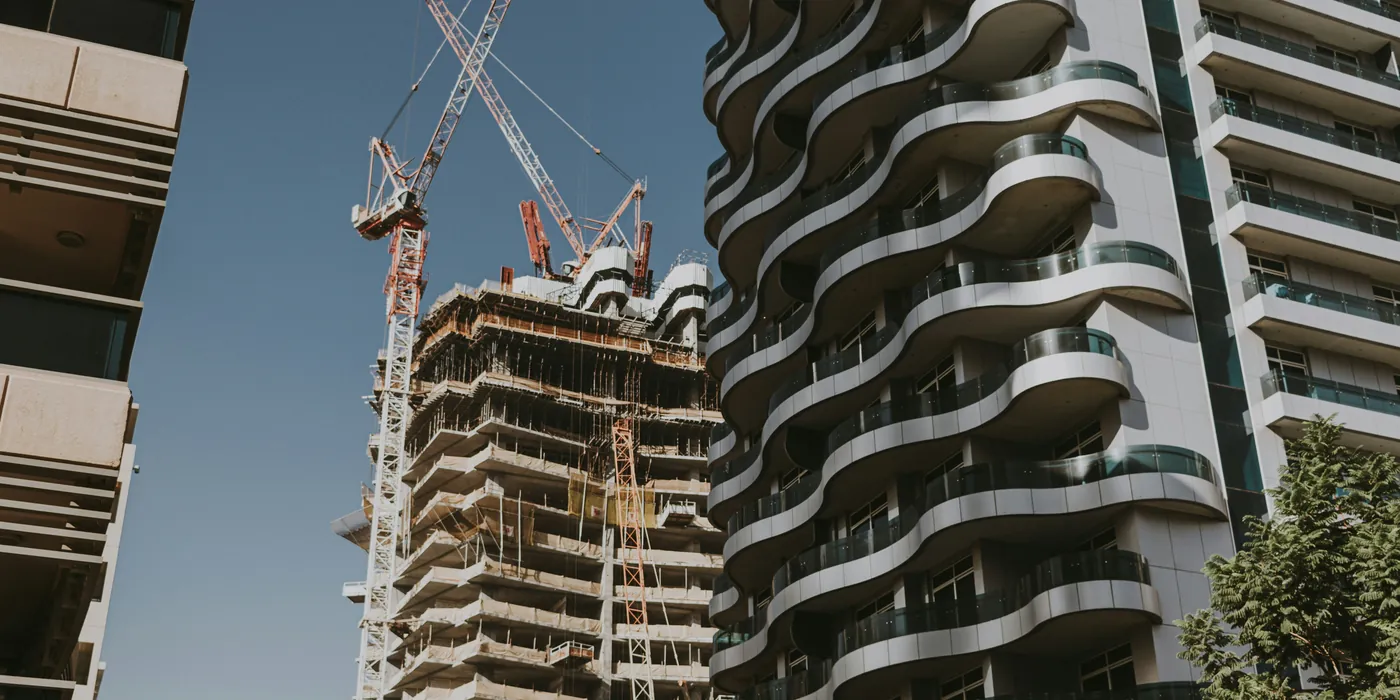
Technology for delivery environments where dependency, time and physical work meet.
Problems propagate before reports catch up.
A major project is thousands of commitments, design packages, permits, contractors, materials, equipment, labor, weather windows, holding each other up. The schedule is a projection of that graph onto a calendar; the graph itself usually lives nowhere.
So when something slips, the consequence travels through the real dependencies faster than it travels through reporting. By the time the monthly report shows a delay, the delay has already chosen which milestones it will take with it.
The capability that matters is not another dashboard on the schedule. It is a representation of the dependencies themselves, current enough and connected enough that propagation becomes visible while there is still room to act.
These are not features. They are the entities, relationships and records that carry the environment's state. The difficult problems usually live between them. In delivery, each one is a dated commitment hanging off the same rail.
Milestone the hub every commitment reports to
Milestone sits at the hub deliberately. In delivery, almost every subject above is a dated commitment: a package due, a permit expected, a crew booked, a pour scheduled. The state that matters is not any single date. It is the relationship between the dates, and how that relationship moves when one of them does.
Six structural failures, not six missing features. Each one is a gap between what the environment physically does and what any of its systems can represent, and each one tends to surface somewhere specific first. The keys are labels for reading this page, not an inventory of anything Fenori has built.
Planning tools hold activities and dates. The real constraints, this pour needs that design approved, that crew needs this permit, live in people’s heads and email threads. When reality diverges from plan, only the people who carry the graph can say what it means.
A change is priced and approved as a local event. Its downstream effect on sequencing, procurement and other trades emerges over weeks. Nobody prices the propagation because nothing represents it.
Cost systems know what was spent; field systems know what was done; neither reliably knows the other. Earned-value answers arrive monthly and argued-over, when the question is daily and factual.
Every small slip spends schedule float, and nothing meters the spend. Activities stay on track on paper while their slack quietly drains, and the project discovers it is out of float only when the next slip lands directly on the critical path.
Owner, contractors and subcontractors each run their own systems and their own versions of status. Reconciliation happens in meetings. The record of what was actually agreed and known at each point is thin exactly where disputes later need it thick.
What was built, changed, approved and known during delivery is what operations and future claims will need, and it survives as scattered documents rather than as a reconstructable record.
A serious organization in this environment already runs substantial technology. Fenori does not begin by assuming these systems need to be replaced. They hold real state; the dependency graph forms around them.
Use what works. Improve what can work better. Build what is missing. Replace only where the outcome requires it.
The dependency structure of delivery, represented and kept current, so propagation is visible before it becomes delay.
Changes, claims and their downstream consequences, connected to the work they touch and the record that will decide them.
Materials and equipment as dated commitments inside the same graph as the work that waits on them.
The delivery record structured so operations inherits knowledge rather than boxes of documents.

The engineering Fenori does is that representation: work, approvals, materials and crews held as one connected, current structure.
How we work →Suppose one design package slips two weeks. The question is what that actually costs, and where. First the program track, drawn: the plan, then the same track after the slip has traveled it. Illustrative, not a customer reference.
The left side is how that answer is assembled today; the right side is the system Fenori would engineer.
The six systems on the left keep running; nothing is ripped out. The engineered system is the graph across them, and the judgment at the center of it stays human.
For delivery environments the center of gravity is the graph: representing dependencies as first-class objects, keeping their state current, and computing propagation, float and exposure over the live structure.
The defining physics of delivery: consequence travels the graph before reporting does.
Owner, contractors and systems each hold partial, divergent status.
Disputes and operations both need what was knowable at each point in time.
Fenori’s deepest builds so far were engineered for financial institutions, where being wrong is expensive, and they are presented here as reference architectures rather than customer references. None of them was built for a construction program, and nothing on this page has been delivered on one. What they prove is the part that transfers.
The discipline: a common representation over fragmented reality, decisions that stay reconstructable, automation under explicit human authority. What does not transfer is assumed context. The physics of delivery, dependency, weather, labor, lead times, are engineered specifically, from inside the environment.
Written from the financial-services work. The arguments are structural, about representation, memory and decision consistency, and they carry across environments.
Each party sees what its role entitles it to see, with a common spine underneath.
Built to ingest imperfect, delayed, human-entered field data without pretending otherwise.
The record is built to the standard of the dispute it may one day serve.
Planning, cost and document systems stay; the graph forms around them.
How Fenori works here. Start with one consequential outcome, work inside the existing environment, engineer what is missing, prove it against actual operating conditions, and expand only when earned.
Related environmentsDescribe it the way it happens on your program, in plain terms, and the first structured read happens right here.
What should your program be able to see that it cannot see today?
This is the point where we would rather understand it properly than pretend we know the answer from a browser.
What should your program be able to see before it becomes delay?
Describe a dependency, a change, or a delivery risk your current systems only show you afterwards.
Begin with a challenge